At the moment, the main obstacle of artificial intelligence (IA) It's not just data processing, but ensure that they reach the processor quickly enough. The bottleneck is in memory: moving large volumes of information at the speed required by current models has become one of the biggest limits in the area. But, Among the technologies recently tested is the use of kilometers of optical fiber as a storage system for AI.
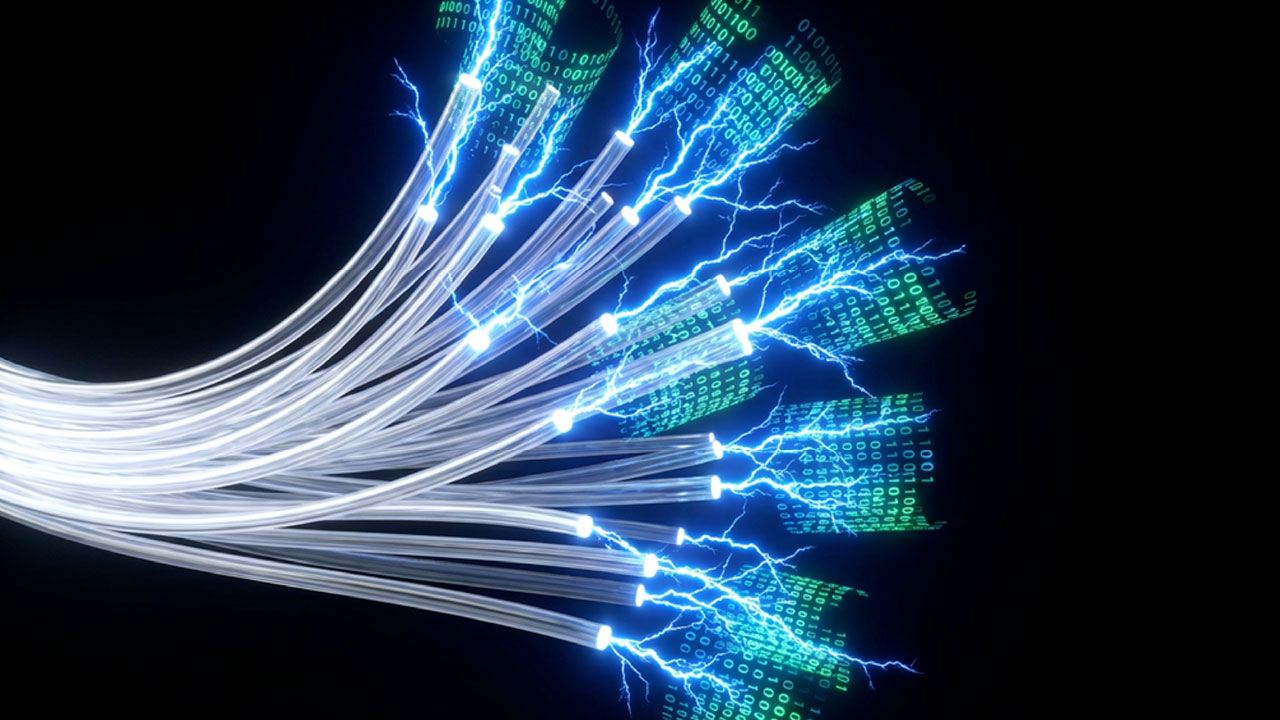
Instead of storing data on traditional RAM chips, the proposal envisages sending information as pulses of light through long coils of optical fiber. According to programmer John Carmack, one of the creators of the game Doom, technology made it possible to transfer 32 GB of data with bandwidth of 32 TB/s for more than 200 km of fiber. “Neural network inference and training can have deterministic weight reference patterns. Then, It is interesting to consider a system without DRAM, with the weights being continuously transmitted to an L2 cache via a recycling fiber circuit.”, Carmack said.
How the technology works
The technology is based on a simple principle, in which light travels through the cable at constant speed. Therefore, the time it takes for the signal to traverse the fiber acts as a form of temporary storage. Instead of data sitting in physical modules, information continues to circulate through the cable.
For tasks that require continuous flow, such as neural network training and inference, the fiber would deliver the data exactly when the processor needed it. The dynamics are similar to a very high-speed treadmill, which keeps the bits in constant motion until the point of processing, reducing delays typical of traditional memories.
Carmack's career, responsible for publicizing this news, has always been marked by engineering solutions outside the conventional market. Doom revolutionized 3D rendering in games in the years 1990. After serving as CTO of Oculus VR, he went on to dedicate himself to Keen Technologies, AI-focused startup.
That's why, on the feasibility of the proposal, Carmack complement: “it would be necessary to interconnect several of them to implement modern models with trillions of parameters, but fiber optic transmission may have a better growth trajectory than DRAM currently, So maybe one day it will become viable.”.