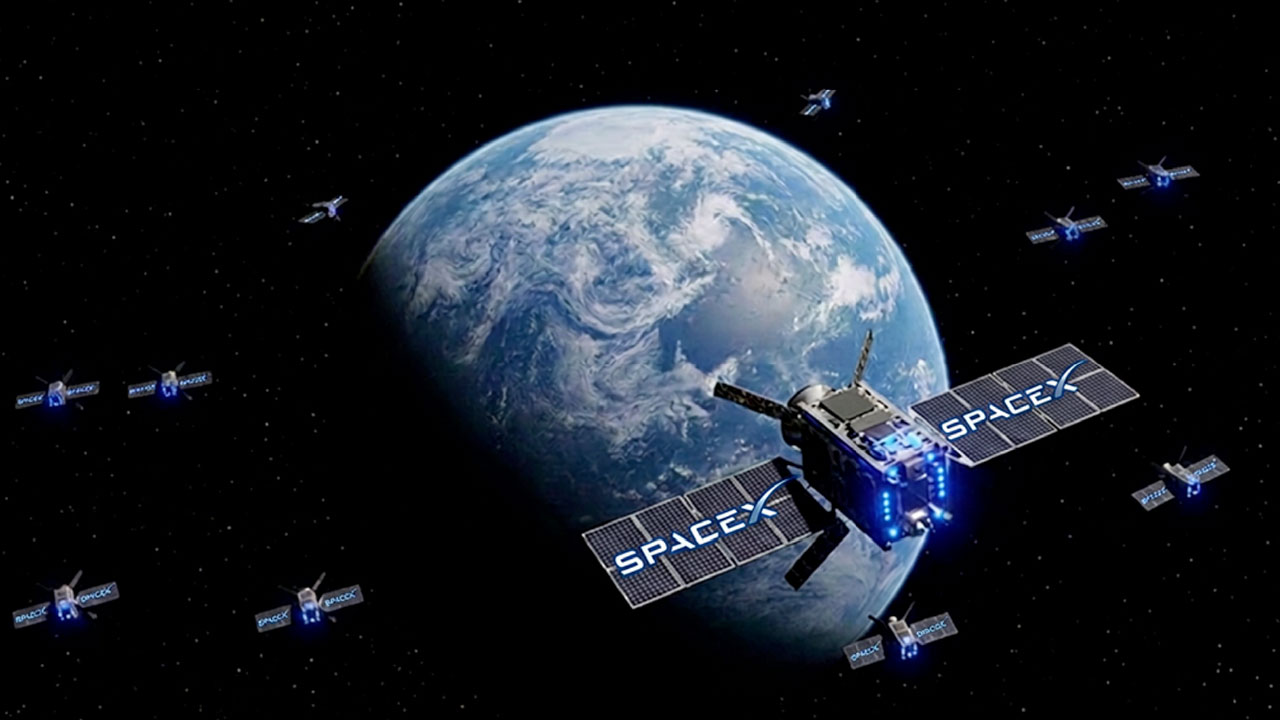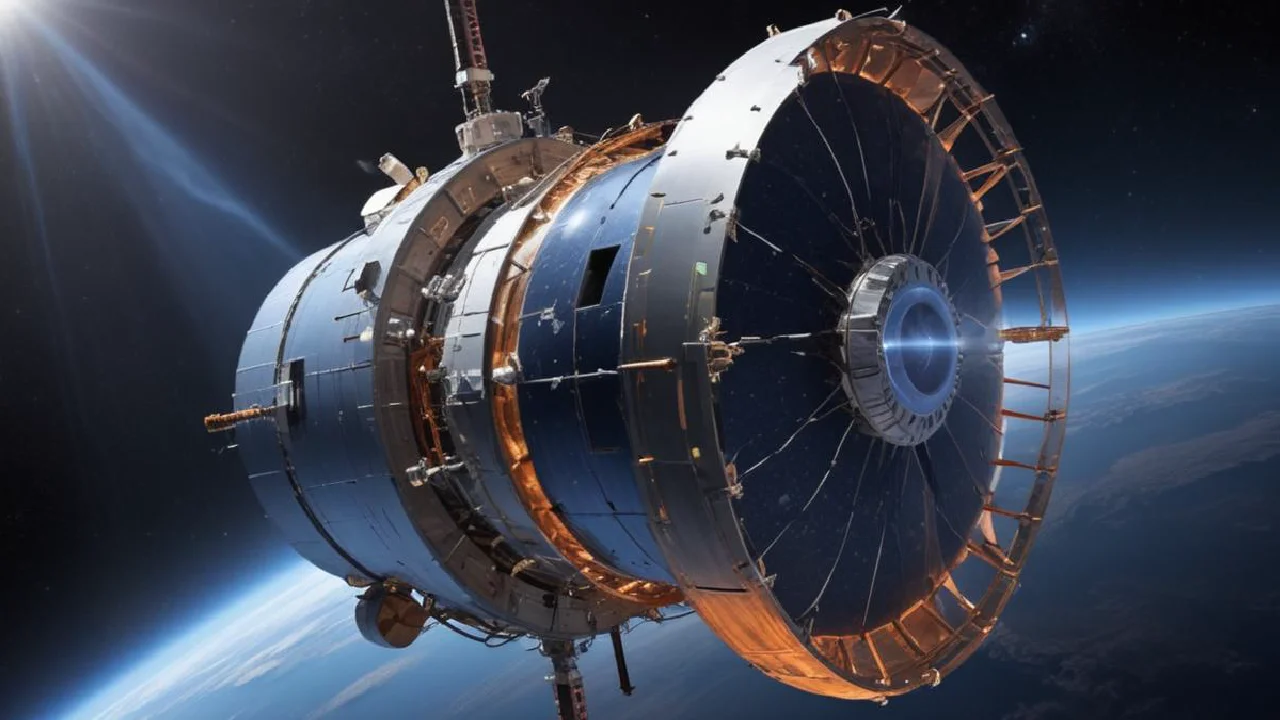
A European study pointed out that installing data centers in space is a viable alternative for digital data storage. During 16 months the ASCEND study (Advanced Space Cloud for European Net Zero Emission and Data Sovereignty) explored and analyzed in depth the conditions for launching structures into orbit.
This solution would meet the excessive volume of data generated by the planet in a more sustainable way.. At the moment, the demand for data centers has shown a huge increase mainly due to the growth of artificial intelligence technology. Just like any file, This data needs a physical storage space.
1.300 blocks until 2050
At the end of the study, the experts concluded that the project is technically and economically viable due to the maintenance needs of data centers in the space. The proposal is to launch 13 units up to 2036, with the aim of achieving 1.300 building blocks in 2050.
Like this, each block would have a surface area of 6.300 square meters and a capacity for your own data center service. The launch would be carried out inside an appropriate space vehicle.
Physical structure is harmful to the planet
At the moment, physical terrestrial installations consume a lot of energy and water to run servers. According to the International Energy Agency, The forecast is that global electrical consumption in data centers will reach 1.000 terawhatts-hour until 2026.
This would be equivalent to Japan's total electrical consumption. Nonetheless, the project appears as a highly beneficial alternative. Due to the proximity to the sun, data centers would have infinite energy in space. Yet, in addition to not generating CO2 emissions into the land, the project would not use water to cool devices.
But, to function correctly, structures must be launched at 1.400 kilometers in altitude (869,9 miles) – three times taller than the International Space Station. In this way, the main challenge will be to build rockets that are powerful enough to reach this altitude.
Study with strong investment
The viability of this project was confirmed after strong European investment. The ASCEND study was carried out using 2 million euros, being coordinated by Thales Alenia Space, on behalf of the European Commission.
The viability of the project is already budgeted at US$ 140 million in 2030, especially to supply 280 thousand kilos of fuel. The head of strategy and operations at the Danish Data Center Industry Association, Merima Dzanic, argues that a “data tsunami” will occur soon, justifying the need for spatial storage.
“AI data centers need something like three times more energy than a traditional data center and this is a problem not just on the energy side, but also on the consumption side”, justifies.