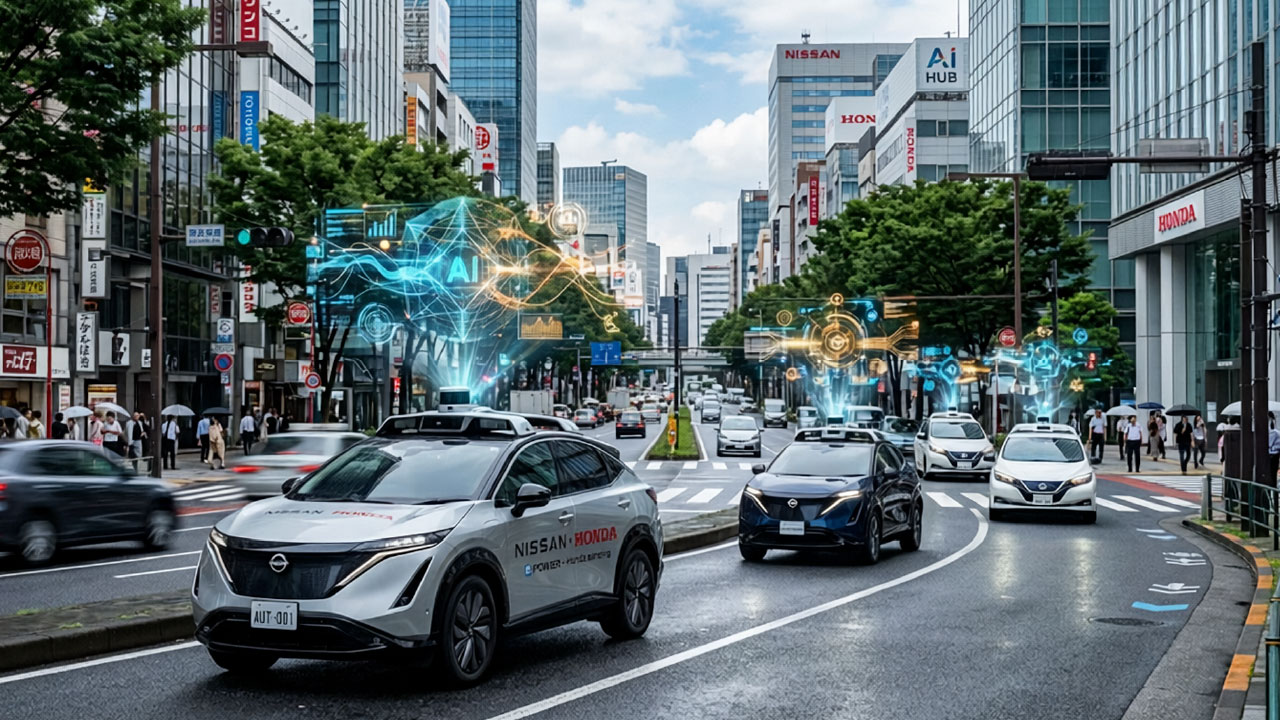
A partnership between two Japanese automobile brands could result in smarter and more competitive cars on the market. Honda Motor and Nissan Motor announced this Monday (31) an agreement for the joint development of software and electronic components for new vehicle models. The collaboration aims to standardize different types of electronic controls (ECUs), that form the cores of software-developed cars (SDVs).
With the aim of expanding its presence in the electric car and SDV market, the companies intend to jointly develop electronic centers, electrical architecture, operating system, essential parts of the middleware and software responsible for controlling different vehicle functions. Integrating these features will enable more connected car systems and components, in addition to facilitating the implementation of new technologies.
New models in three years
The prediction is that the expansion of models with new engineering will only occur from 2029. Until then, the companies do not rule out the advancement of the partnership in the area of mechanics, including joint development of components for electric cars, batteries and software platforms. In an official statement, Honda reported that:
“The domain of software aimed at autonomous vehicles, fundamental for vehicle intelligence and electrification, was identified as an important area of collaboration, given rapid technological evolution and the need to strengthen competitiveness through greater agility in research and development and efficiency in investments”.
Partnership seeks to confront China's advance
The collaboration between Honda and Nissan is not new to the market. Not end of 2024, the brands had already announced that they planned a merger to become a large industrial entity. Nonetheless, the project was not consolidated. Now, companies resume their rapprochement through this partnership focused on the development of technologies.
The partnership between the Japanese companies aims to increase competitiveness and reduce the commercial difference compared to Chinese brands and Tesla. Brands are betting that the joint development of technologies and components will guarantee cars more efficient engineering and resources, in addition to increasing innovation and competitiveness, including through cost reduction.