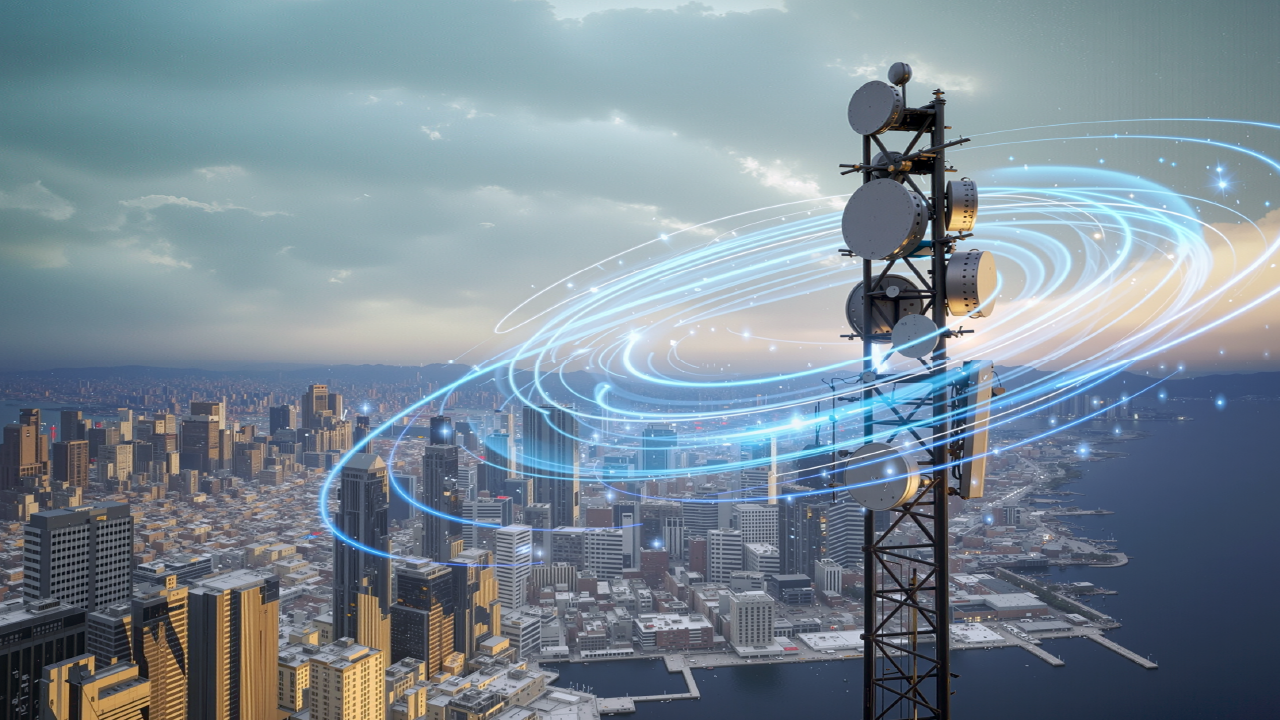
Mobile network technology could take on unprecedented functions. In the coming years, 6G network telecommunications towers will also be sensors capable of monitoring the environment. This ad is from Korean operator LG UPlus, which argues that the next generation of connectivity will not just be about increasing internet speed. According to the company document, this technology known as ISAC (Information and Sensing Convergence) will reuse the same towers and base stations used for 5G.
Although, the structure will not only be responsible for data transmission, functioning as a kind of radar. The proposal is that the network is a complex and intelligent infrastructure, able to “see and feel” what is around you. The operator claims that 6G towers will capture movements, will detect machine vibrations and identify objects on the streets. Through this functionality, It will even be possible to identify people who are not carrying any cell phone or device.
Smart cities: anticipated benefits
This environmental perception could be the key point to enable a new generation of technologies. According to LG, 6G should enable safer autonomous vehicles, able to anticipate risks even without cameras, in addition to industries that monitor their machines in real time based on vibrations recorded by the network. In the same way, smart cities would benefit from towers to track pedestrian flows, detect obstacles and coordinate urban systems with greater precision.
Next steps
Official 6G network standards are expected to be released 2029. That's why, the first commercial networks should only appear in 2030, as per Ericsson projection. Until these releases, different companies will continue exploring technological innovations related to infrastructure. Beyond LG, Huawei and Qualcomm are already discussing the potential of 6G to create complete digital versions of the physical world — the so-called Digital Twins.
This technology will allow scenario simulations and automated systems training. Samsung also recently highlighted the central role of ISAC, advocating that 6G be communicated to the public as a technology with practical benefits and not just as a speed jump. Therefore, the sector points to a network that not only connects, but interprets the environment and expands the use of data in different urban and industrial areas.