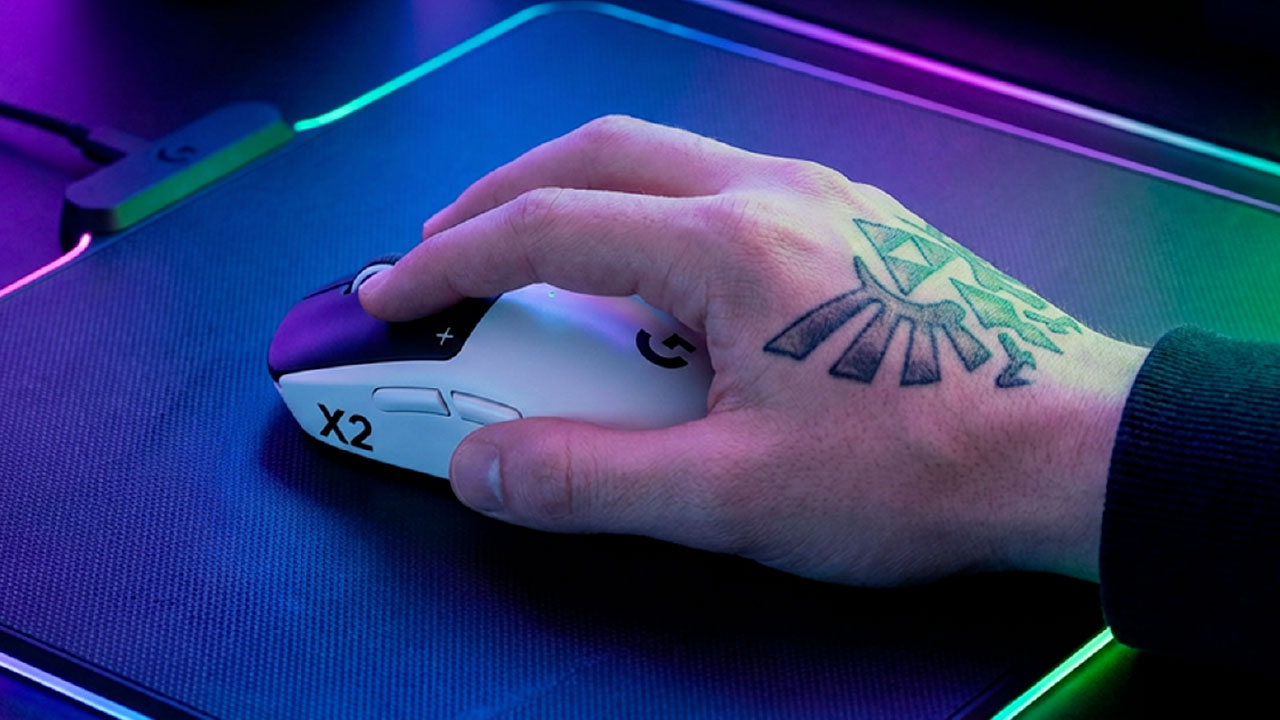
The Logitech Pro X2 Superstrike buttonless mouse is the big trend in the peripheral market. Aimed at gamers and competitions, the product promises to register the click without dependence on the physical switch. Using haptic technology, the novelty brings sensors that seek to circumvent common characteristics of the mechanical microswitch, how to wear, variation in feel and the small “invisible” delay that the firmware needs to filter to avoid double readings.
For a long time, the peripherals market invested in different launches, but without much real impact on the competitive experience. Now, the click stops being a consequence of a spring and becomes a consequence of a system, with algorithm and engine. The button still exists as a physical part and continues to be pressed normally by the finger. The change is in the triggering of the command, being detected by electronic sensors, while the “clack” sensation is produced by haptic feedback.
Competitive difference
The product promises to deliver faster semi-automatic games, less muscle fatigue in long sessions and greater consistency during tracking. In shooting games, for example, it's not enough for the gamer to click quickly. What defines performance is how quickly the mouse resets. The sensor system allows you to configure this reset in a simplified way.
How it works in practice
The product also has a button. The user continues pressing on a plastic piece that moves down a few millimeters. The difference is that there is no longer a traditional microswitch acting as an electrical trigger responsible for closing the circuit.. In conventional models, the user presses the button, a spring compresses, the metallic contact closes the circuit and the electrical signal is sent to the computer.
With the new product, the movement of the button is captured by an electronic sensor. Therefore, physical contact between internal metal parts is no longer necessary to register the command. Displacement changes a field detected by the sensor, usually based on electromagnetic induction or magnetic variations, and the firmware interprets this change as clicking at the exact point configured.
The sensation generated by haptic technology is also part of the proposal. Instead of relying solely on mechanics to create resistance and feedback, the device uses internal actuators — small motors or vibrating mechanisms — that produce impulses synchronized with the user's touch. It is this synchrony that makes the finger interpret the response as a real click.