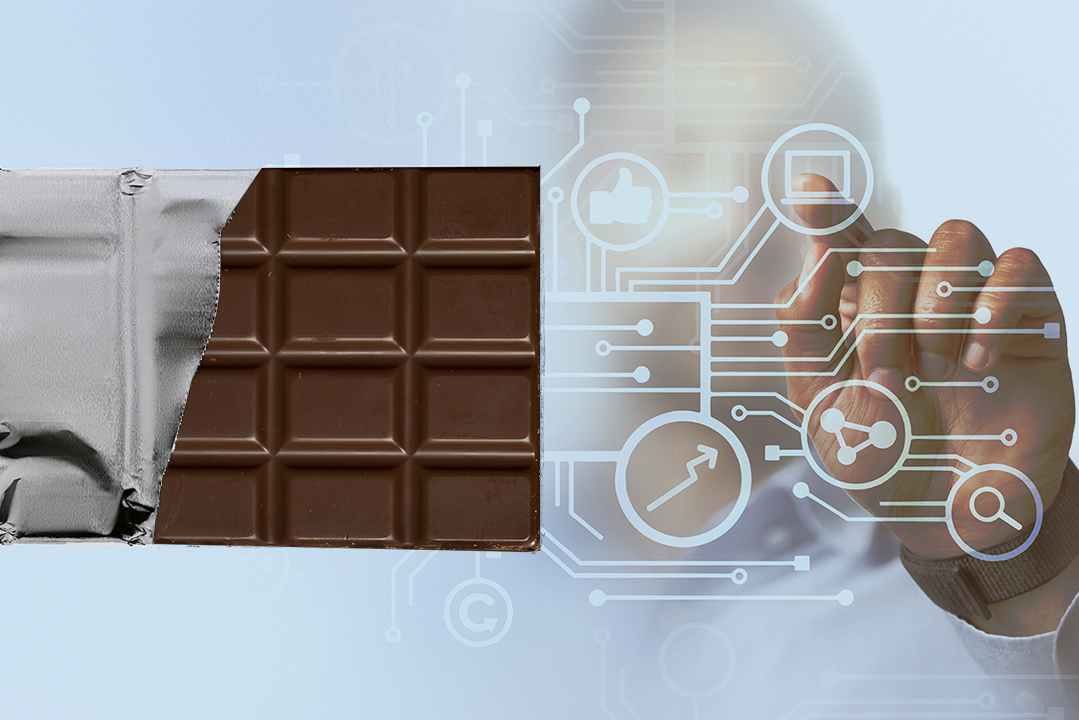
Little by little, 5G becomes a reality in Brazil, offering technological opportunities for companies and industries. Using the fifth generation network, Nestlé is setting up a smart chocolate factory at its Caçapava unit, in the state of São Paulo.
A robot car is being tested by the Swiss company, optimizing processes and suspending the use of employees in repetitive and operational tasks. The novelty is being implemented in the production of the KitKat chocolate line, responsible for the production of 2 million units daily.
The machine is responsible for transporting wafers to the chocolate station. For operation, the car has an antenna that responds to commands from the central station. The smart factory project aims to program new machines that, how are you, will use cutting-edge technology to “think” and “talk” on their own, without human interference.
Speed of 700 megabytes
Using 5G technology, the company was able to connect several devices at the same time through a partnership with Embratel and Ericsson. Like this, the robot car can run in the factory extremely quickly and with instant commands.
The machine has a range of 3,5 GHz and an average browsing speed of 700 megabytes. The response time between equipment is only 8 milliseconds, something that would be less than a blink of an eye. Furthermore, the response allows the robot to dribble around any obstacle present on its path.
The 5G network has favored other cutting-edge technologies, such as the use of artificial intelligence, internet of things, cloud data storage and augmented reality. For example: using programming and automation, Nestlé's central station can identify low cocoa stocks to replenish more effectively.
The company has also invested in augmented reality glasses, feature that allows errors to be identified between teams even when members are at a distance.
R$ 80 million until 2030
It is clear how the use of 5G goes far beyond the benefits for cell phones and antennas. With technology, response time between operating machines is faster, allowing greater automation of manufacturing processes.
Like this, the National Confederation of Industry (CNI) estimates that a financial impact of approximately R$ 80 million will be made possible by the use of 5G by 2030. That's why, Many brands that aim for greater efficiency and autonomy in the production line are focusing on this technology.
Some examples are: Gerdau, Away e Stellantis. Many projects in this line have already been carried out together with technology suppliers such as Ericsson, Embratel, Nokia, Huawei, IBM and NTT.
Innovation Center
At the moment, Nestlé is present in 75 countries. Although, the Caçapava unit, located in the region of São José dos Campos, it was the first Nestlé factory to have the 5G network.
The location was chosen for the experiment because it is in this region that the company's research center for technological solutions is located.. Everything that is implemented in the unit and works, after, ends up being replicated throughout the American continent.