In the coming years, commercial planes will benefit from an innovation announced by Amazon. The company recently introduced the Leo Aviation Antenna, a satellite internet antenna designed exclusively for aircraft. Aimed at the corporate sector, the device has a compact and discreet design, with electronic scanning technology that directs the signal without the need for mechanical parts, increasing efficiency and reducing the need for maintenance.
The equipment was presented at the Aircraft Interiors Expo 2026, in Hamburg, in Germany, and puts Amazon in direct competition with Starlink, Elon Musk's company. According to the company, antenna hardware simultaneously supports up to 1 Download Gbps and 400 Upload Mbps per aircraft, capacity shared between all crew and passengers present on the flight.
Operational advantage
Amazon's satellite antenna also stands out for its reduced installation time: the process can be completed in about a day, significantly reducing the period during which the aircraft needs to be out of operation. This would be a relevant operational advantage compared to competitors such as Starlink and SpaceX, whose system may require between ten and fourteen days of downtime for installation.
Amazon has already closed a commercial agreement with the airlines Delta Air Lines and JetBlue. From 2028, Delta will equip 500 aircraft with free Wi-Fi for SkyMiles loyalty program members. JetBlue is expected to begin installations in 2027. Delta's decision to opt for Amazon's solution, instead of Starlink, also took into account the existing partnership with Amazon Web Services (AWS), which provides the cloud infrastructure used in much of the company's operations.
The commercial launch is scheduled for mid- 2026, period in which Amazon projects to have around 700 units in operation. In parallel, the company requested the United States regulatory agency (FCC) the extension of the deadline to meet the initial target of satellites in orbit, that previous 1.600 units until July this year.
Starlink still leads segment
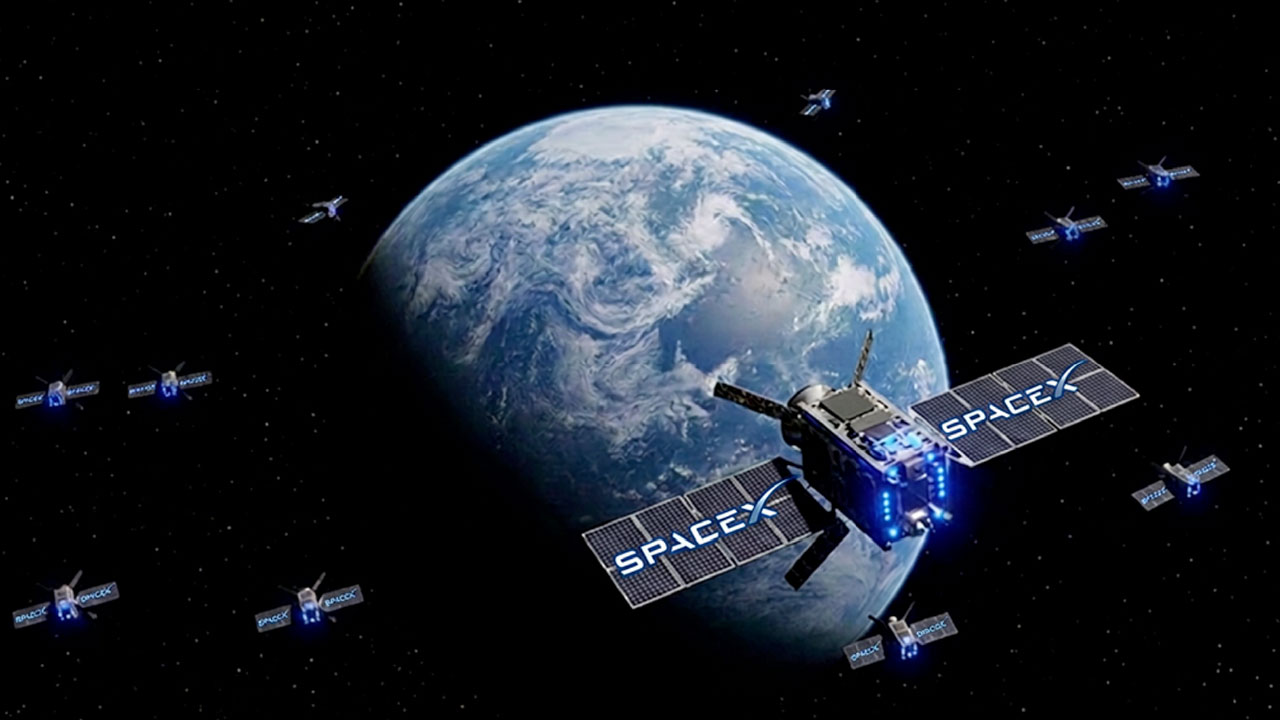
Amazon seeks to compete in the aerial satellite connectivity market, a rapidly expanding sector driven by demand for high-speed in-flight internet. Nonetheless, Amazon's constellation is still inferior to that of the great leader: until the beginning of April, the service had 241 satellites in orbit, number well below the more than 10 thousand from Starlink. Even so, according to The Wall Street Journal, or CEO from Delta, Ed Bastian, stated that Amazon's service offers comparable quality, or even higher, to that of the competitor.