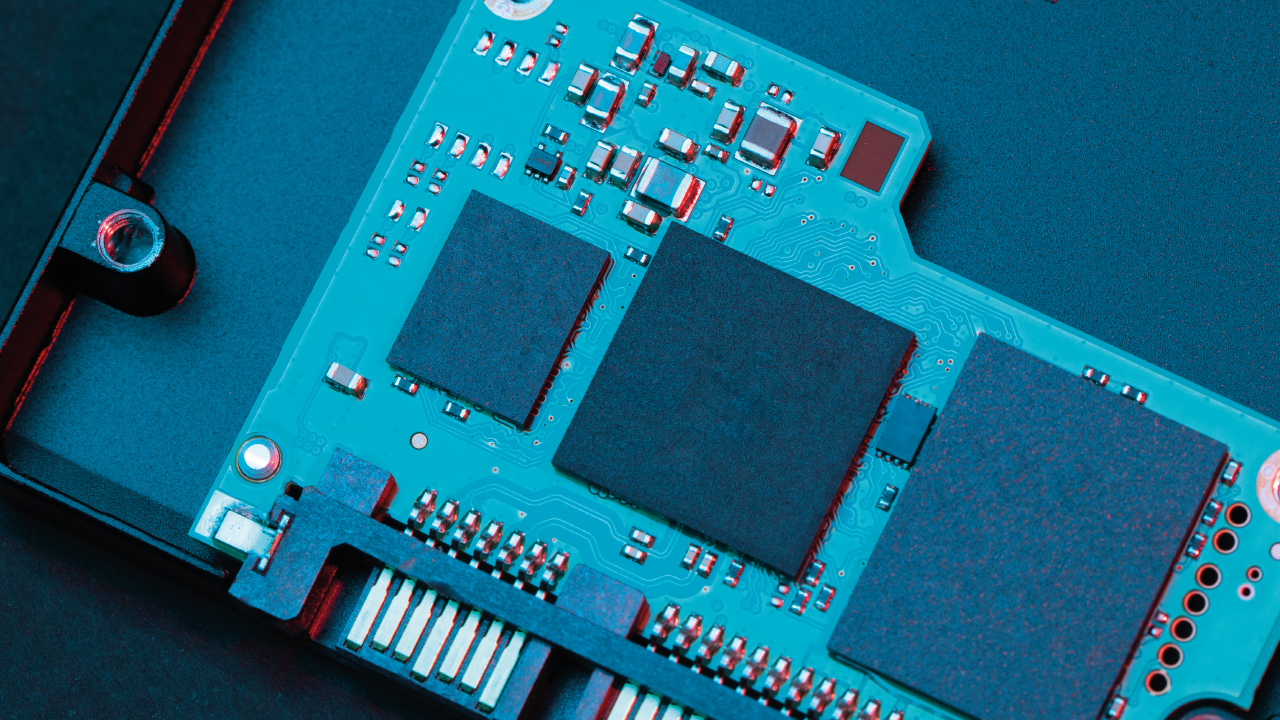
In a few years, the data storage capacity could be much higher than the currently known model. This is what research promoted by Seagate Technologies seeks and defends, leader in the HD segment. The purpose of the study is to increase this capacity to 120 TB (terabytes – unit of measurement for storage).
To achieve this goal, the researchers involved are betting on improving technologies that use heat-assisted magnetic recording (HAMMER). With the advancement of studies, The promise is to enable the recording of 10 terabytes per square inch.
This could represent more than 120 TB for storage devices with 10 dishes. The proposal is that the magnetic generation be presented in a 3D system on disks. Like this, This technology improvement would be capable of doubling the maximum capacity of magnetic drives.
How the technology will work?
The research is being carried out jointly by Seagate Technologies, and NIMS (National Institute for Materials Sciences) by Tohoku University. A detailed archive of the studies was recently published by scholars. And HAMMER, magnetic generation technology in question, is not considered new in this field.
But, The commercialization of HDs with such high TB is still unfeasible in the current market reality due to the difficulty of storing at different levels. Although, studies are focused on providing special magnetic recording, in multilayers of granular media (layers applied to the HD disk).
According to the study, This would be possible through the use of platinum and iron alloys in the development of magnetic films. In practice, storage would feature two layers consisting of nanogranular films made up of FePI-C (Iron – Platinum – Carbon).
The layers would be separated by a third, composed of RU-C (Ruthenium – Carbon), with a cubic crystal structure. This technology would be responsible for recordings in different magnetic fields and temperatures, improving density, efficiency and increasing storage stability.
Implementation in 10 years
At the moment, the technological market has storage solutions of approximately 30 TB. And HAMR technology (Heat-Assisted Magnetic Recording) symbolized a milestone for data storage due to the increase in the maximum terabyte amount. That's why, before that, storage capacity was even lower.
HAMR considerably increased the density of hard drives when compared to PMR (Perpendicular Magnetic Recording). Nonetheless, constant technological evolution and the advancement of AI (Artificial intelligence) will require greater storage capacities and, that's why, appear to be a challenge for the market.
Studies are still ongoing and, therefore, the forecast for the implementation of the new HDs is at least 10 years. The estimate was made by Seagate which, being the leader in this segment, sees advances in storage as a priority. Beyond the company, Western Digital and Toshiba are market leaders.