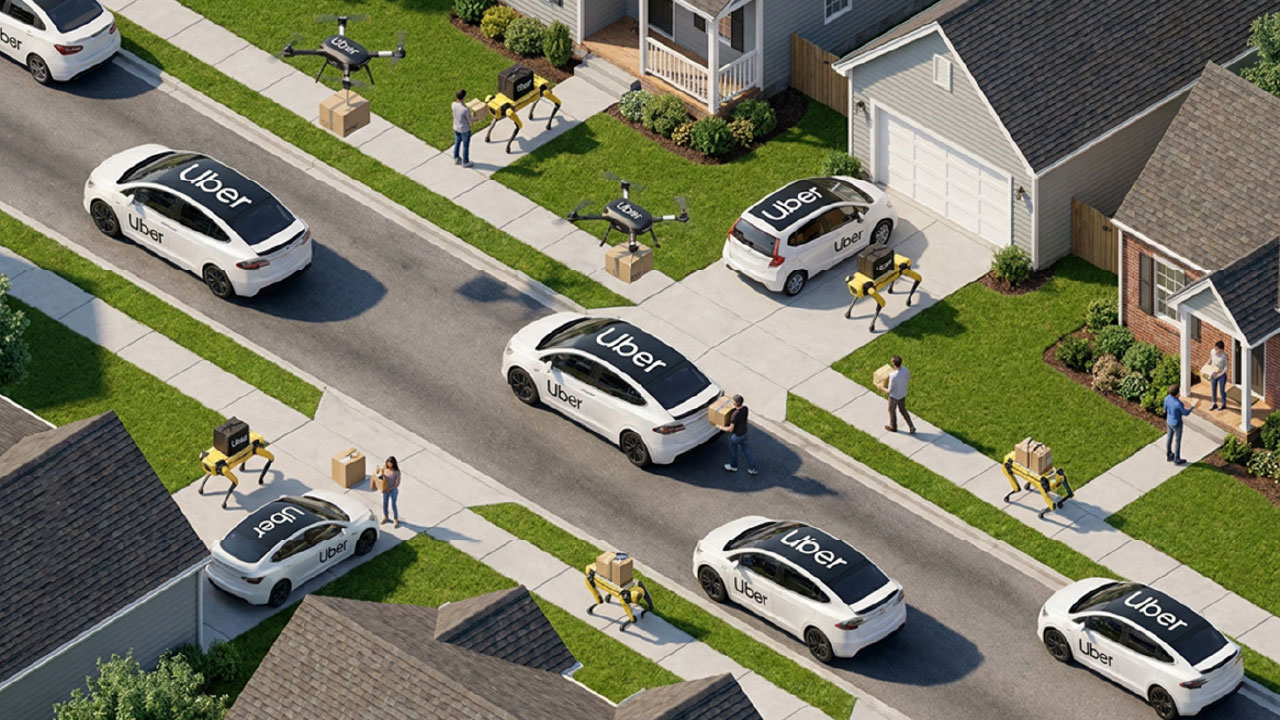
Uber moved the market with one of the biggest technology acquisitions of the year to strengthen its global presence in delivery. On Thursday (16), the American company announced the purchase of Delivery Hero, German company that owns food delivery brands, like foodpanda. The agreement was signed by 41,50 euros per share, valuing the company in US$ 14,8 billion. Discounting the participation of approximately 37% that Uber already had, the operation corresponds to approximately US$ 13,7 billion.
With this new partnership, Uber strengthens Uber Eats and becomes part of one of the largest mobility and delivery platforms in the world, operating in 99 countries. According to the company's statement, the combined volume of orders (gross bookings) should reach US$ 236 billion. The main motivation for this would be the expansion of DoorDash in international markets, currently considered Uber's biggest rival.
Strategy to expand markets
Instead of competing for space with the competition, the acquisition of Delivery Hero is part of the American company's strategy to expand its presence in markets where it still has little presence. The move also responds to DoorDash’s advance in other countries. Present in more than 70 European countries, Asia, Latin America and the Middle East, Delivery Hero expands Uber's presence in markets where Uber Eats was still less competitive.
Investments in Delivery Hero began in 2024 with the purchase of US$ 300 millions in new shares. Little by little, the company became the largest shareholder of the German company, getting about 37% do capital. The final proposal was also above the first offer presented by Uber. In May, the company offered approx. 33 euros per share, raising the value to 41,50 euros to complete the negotiation.
Delivery Hero's management and supervisory boards recommended, unanimously, for shareholders to accept the proposal. A Prosus, controlling company of iFood and one of the main shareholders of the German company, also committed to selling its stake, increasing Uber's economic share to around 53%.
Approval depends on regulatory bodies
The conclusion of the agreement still depends on the approval of Delivery Hero shareholders and regulatory bodies. That's why, the main challenge lies in the analysis of antitrust authorities, as the two companies have overlapping operations in parts of Europe and the Middle East. To facilitate negotiation approval, Uber evaluates the commercialization of some assets in these regions. Delivery Hero agreed to the sale that would cover 14 markets for investment firm SSW Partners.