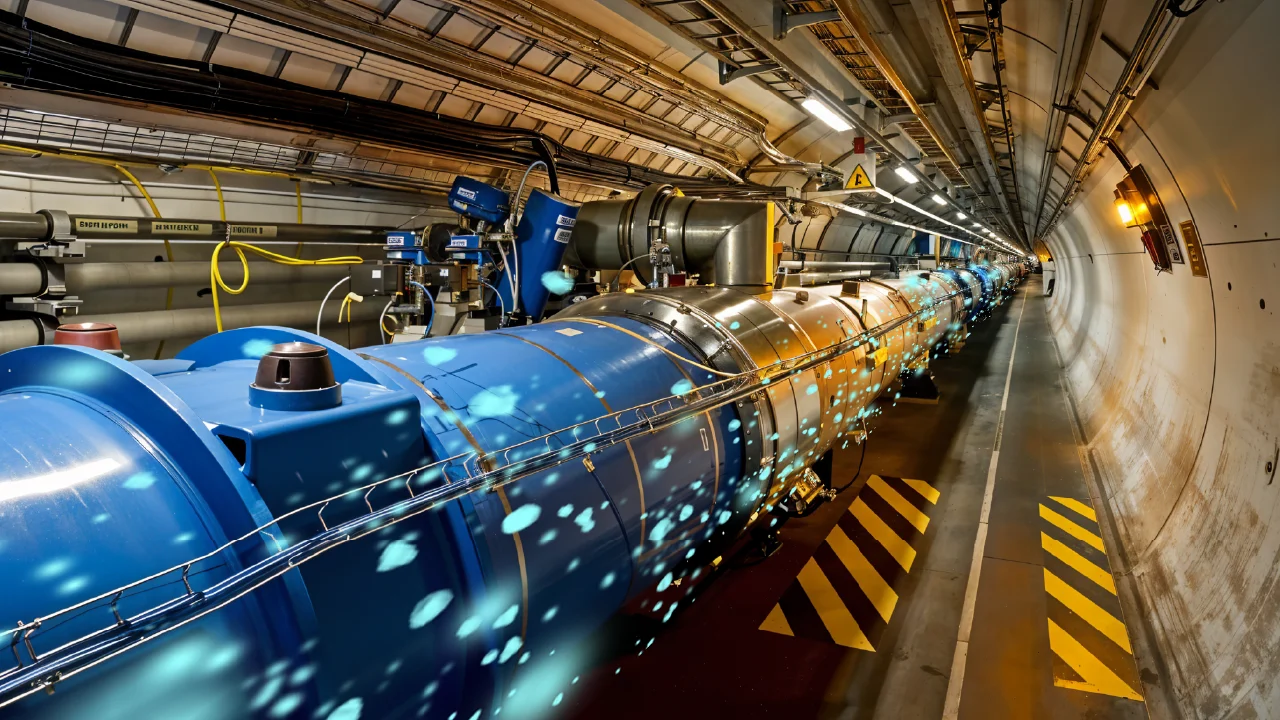
The design of the new particle accelerator was released by the European Organization for Nuclear Research (CERN). Promising to be the largest and most efficient in the world, o Future Circular Collider (FCC) will have 90 kilometers in circumference, being three times greater than the circular in activity, the Large Hadron Collider (LHC). In comparison, the current one only has 27 kilometers and innovation will take its place when the machinery is retired.
Over the last few years, The Large Hadron Collider has already undergone several updates to its structure, but, CERN recognizes that it has reached its maximum capacity. Despite the publicity of the project, the FCC will be a long-term release. At first, the particle accelerator will allow electrons to collide with the counterpart (positrons). But, in four decades, the objective is for it to collide with the protons, as is already done by the LHC.
Release forecast
With investment of 1,5 billion Swiss Francs (R$ 104 billion), the extensive and detailed project will have several stages until launch. The first part is expected to start operating only from 2030. Nonetheless, the construction and improvement process may exceed 12 years. The group of engineers responsible for the research has already presented more than 100 different scenarios for making the new accelerator viable.
Therefore, found that the best alternative to guarantee efficiency would be for the FCC to have a 200 meters deeper than the current, i.e., duas vezes mais fundo. The final report will be reviewed by different independent experts before it is forwarded to the CERN Board. The Final Accelerator Guidelines, although, estão previstas para 2028.
Sustainability and compensatory measures
CERN says the new structure was designed to maximize scientific benefits and minimize environmental and social impacts. That's why, the project has compensatory measures that will benefit France and Switzerland, countries where the research organization operates in the territory. Now, CERN intends to move forward with discussing the project with society, presenting a sustainable research framework.
The objective is for the heat generated in the region by the particle accelerator to be used to heat the water in local villages.. The organization highlighted its sustainable purpose in an official statement. “CERN has made a commitment that any new project at the laboratory would be an example of sustainable research infrastructure, integrating ecodesign principles into all phases of the project, from design to construction, operations and disassembly”.
The resources that will be invested in the new accelerator come mainly from CERN's annual budget. The amount will cover the structure construction and distribution stages.